P-S Suspension Logging Method
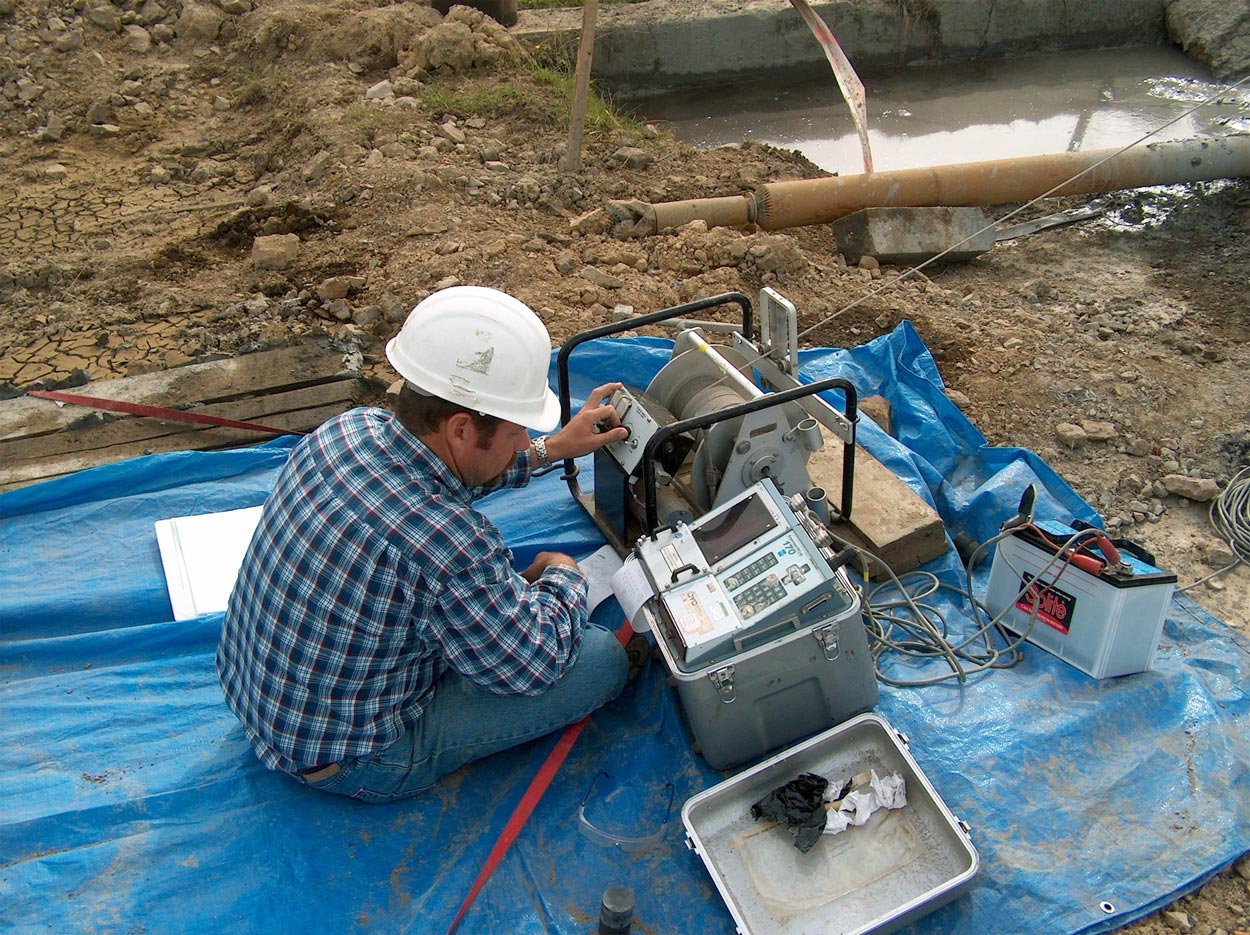
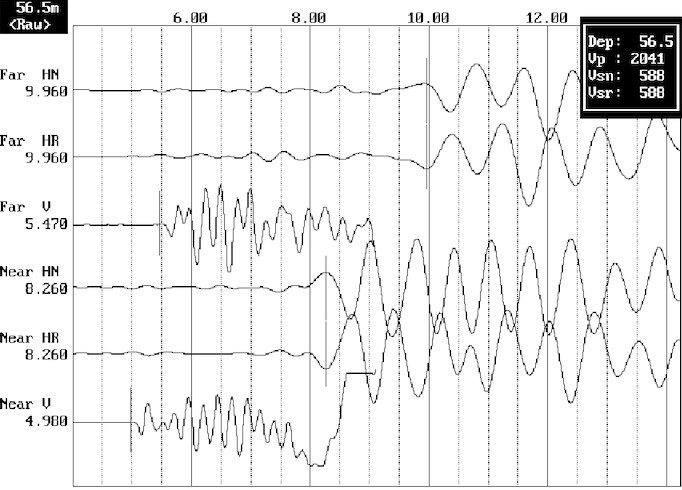
Suspension P-S velocity logging was developed by researchers at the OYO Corporation in the mid-1970s to answer the need for a technique that could measure seismic shear-wave velocities in deep, uncased boreholes. The method gained acceptance in Japan in the mid-1980s and was used with other velocity measurement methods to characterize earthquake site response. Since the early 1990s it has gained acceptance in the U.S., especially among earthquake engineering researchers. GEOVision personnel have logged over 1500 boreholes using this technique since 1991.
Downhole Seismic Velocity Logging
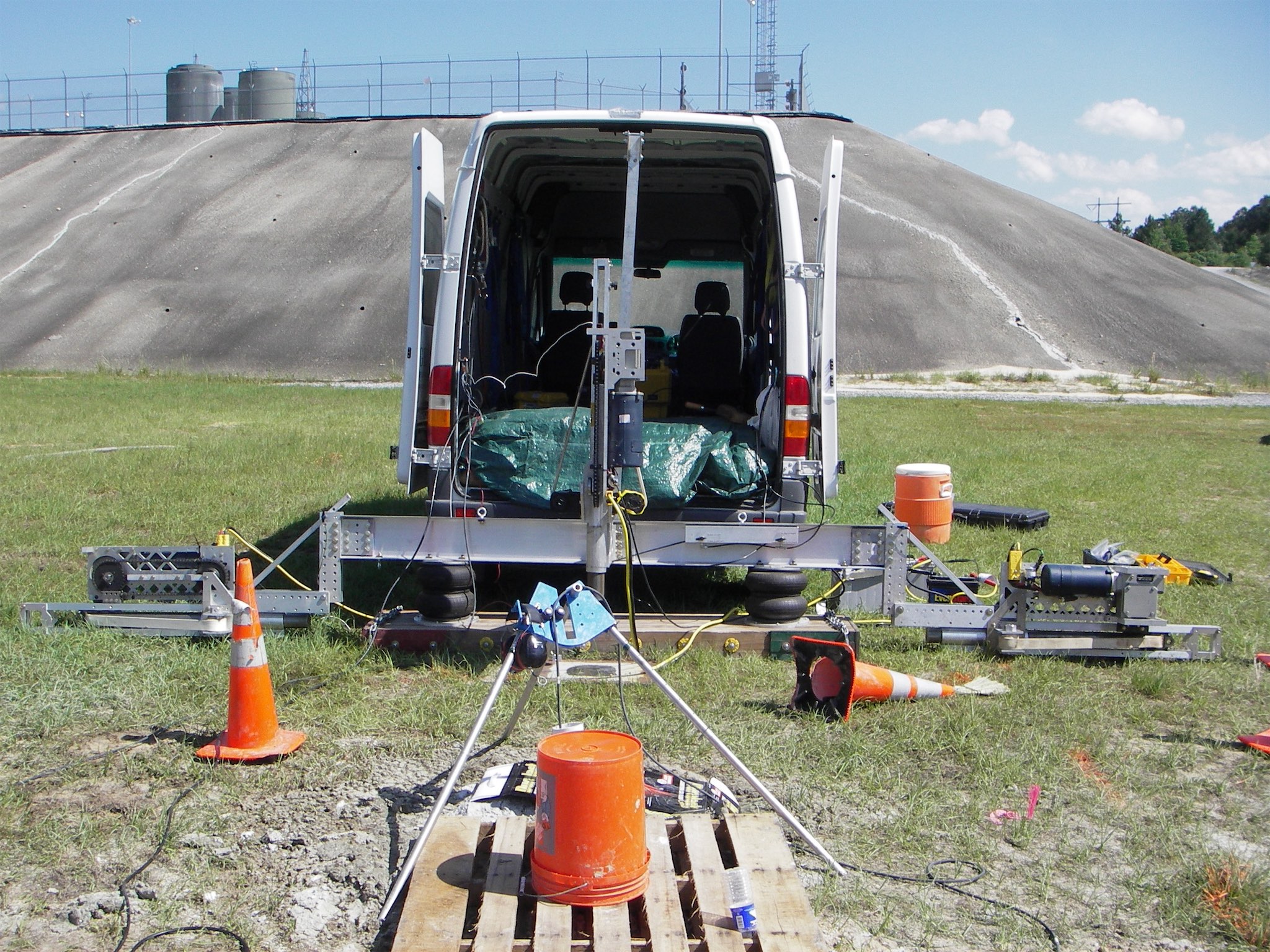
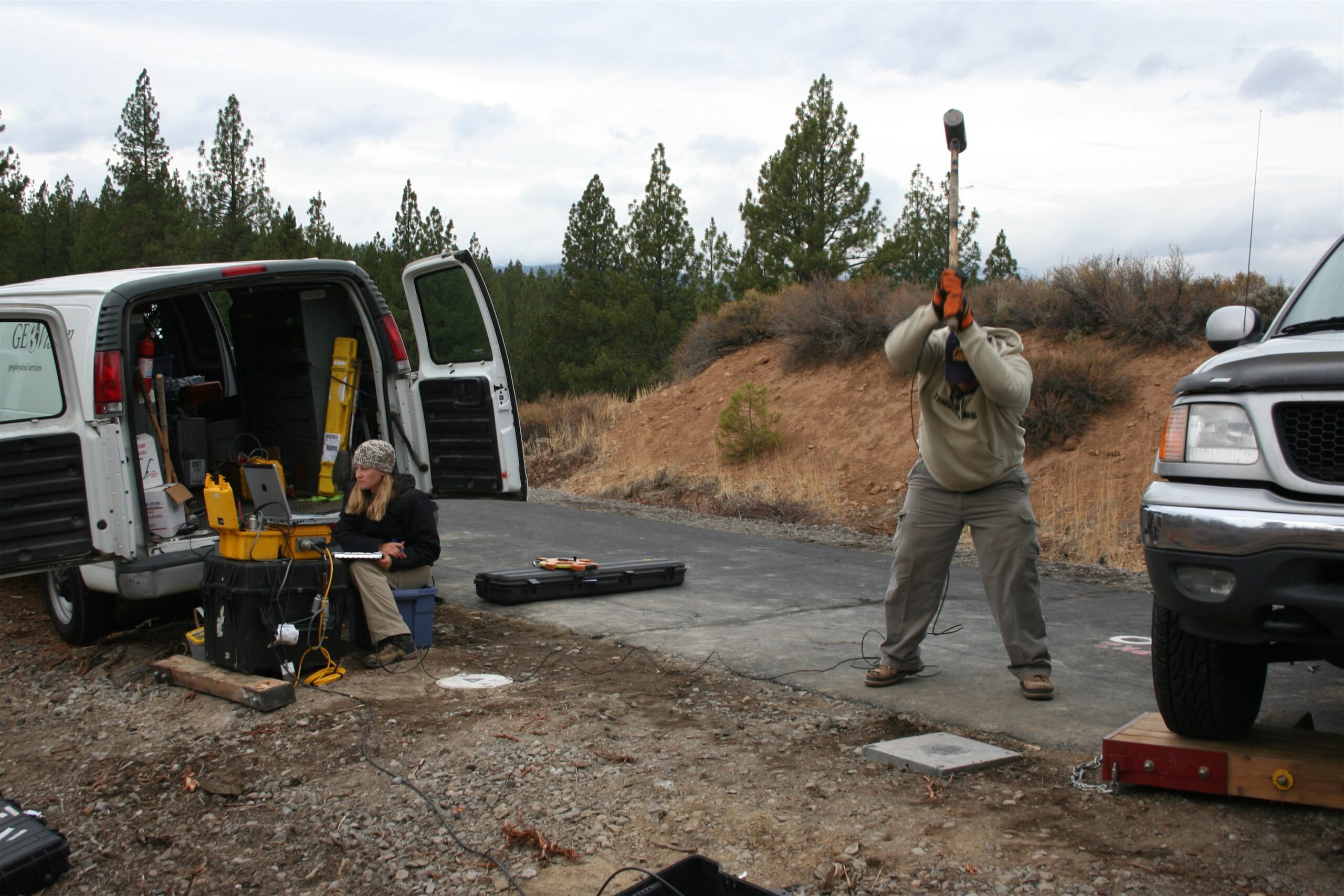
Downhole seismic velocity logging is a well known method of measuring seismic wave velocity profiles, and has been used for more than 50 years. This method relies on a surface source to generate P- and S-waves that travel down the soil or rock column where they are recorded by a sensor(s) locked in a borehole. Travel time is measured and recorded using a trigger and a digital seismograph located at the surface.
Borehole Televiewer Logging Methods
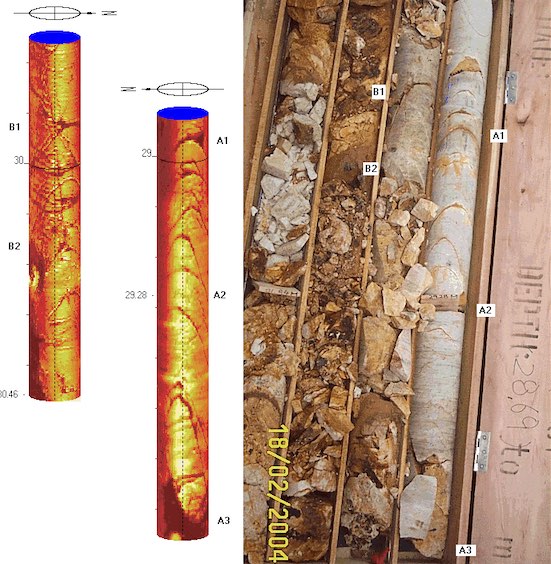
Borehole televiewer logging tools are used to obtain oriented images of borehole cores when core recovery is difficult, costly, or otherwise not available. Two different methods or technologies are available: the first uses the acoustic signal from a rotating sonar transducer and is called an “acoustic televiewer”. The second uses a high resolution digital color camera with a light source and is called an “optical televiewer”. Both methods utilize a built-in fluxgate magnetometer to orient the image with respect to magnetic north.
The resulting data offers the unique ability to present the core either as a wrapped image, showing an external view of the core as if it were laying on its side; or as an unwrapped image, looking out from the center of the borehole. One popular visual data display option is the projection of features onto an imaginary core that can be rotated and viewed from any orientation. Further analysis allows void and joint data to be presented in terms of depth, direction of dip (with respect to North), dip angle, and strike.
Typical applications of borehole logging include:
- Dam safety investigations
- Seismic site response studies for bridge abutments, dams, buildings, etc.
- Foundation studies
- Measurement of soil/rock properties (i.e. shear modulus, bulk modulus, compressibility, and Poisson’s ratio)
- Characterization of strong motion sites
- Velocity control for seismic reflection surveys